In February 2026, a CGAP delegation embarked on a five-day mission to China. Traversing four cities, the delegation conducted a multi-dimensional exploration: from the digital finance in Shenzhen and tech-integrated traditional banking in Hangzhou, to the Small and Micro Finance Innovation Demonstration Zones in Taizhou, culminating in high-level policy dialogues in Beijing. Through site visits to industry leaders including WeBank, Ant Group, Zhejiang Rural Commercial United Bank, and Bank of Taizhou, the mission fostered rigorous intellectual exchange with Chinese regulators and scholars at the International Symposium on Financial Health. This south-to-north mission served not only as a professional assessment of China’s financial health, but also established a robust platform for mutual learning, injecting new momentum for global financial health.
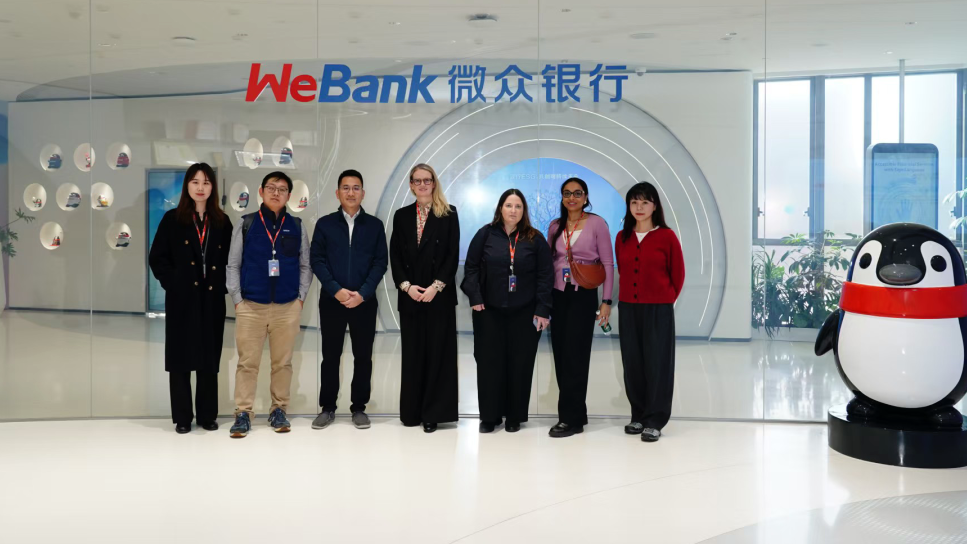
On February 2, at the team’s first stop - WeBank in Shenzhen, the agenda centered on how digital technology empowers inclusive finance and financial health. As a trailblazer in China’s digital banking, WeBank has redefined industry standards by operating entirely online bypassing the traditional brick-and-mortar model. This digital-first approach significantly streamlines approval and disbursement processes, making inclusive finance a reality for a broader population. At the Enterprise Control Center (ECC)—a high-tech facility akin to a “tactical command center”—delegates witnessed real-time system monitoring and sophisticated risk forecasting, gaining a visceral understanding of China’s fintech prowess. “The ‘Tech + Inclusion’ model established here serves as a paradigm for global SME financial health,” remarked one delegation member. Building on a long-standing partnership, WeBank and the Chinese Academy of Financial Inclusion (CAFI) highlighted their 2025 assessment tool. By evaluating core indicators such as cash flow, risk resilience, and debt structures, this “financial health check-up” provides SMEs with precise diagnostics and tailored strategies for sustainable growth.
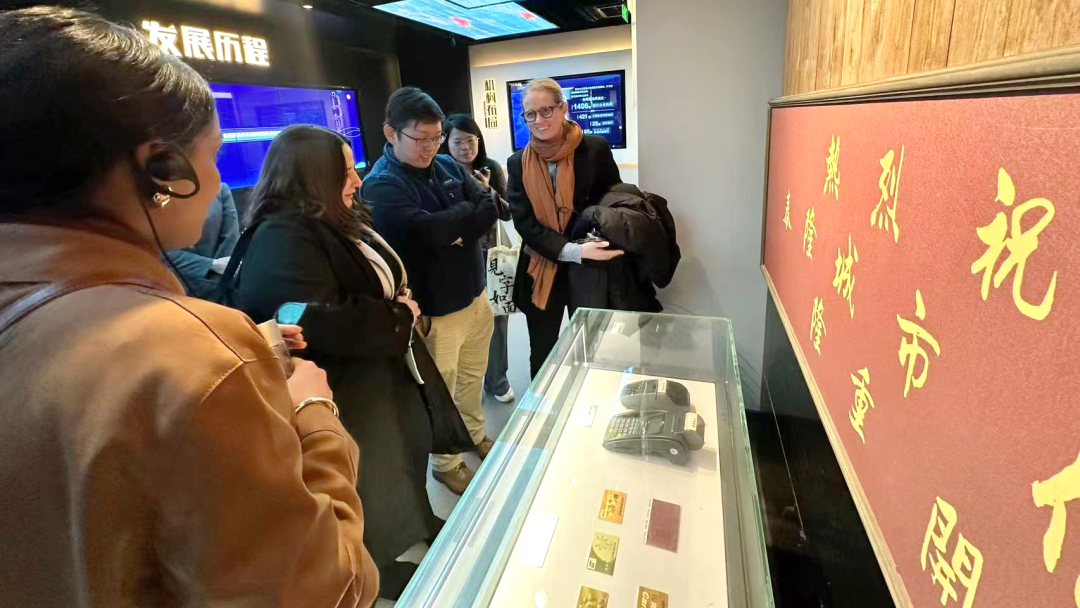
On February 3, the delegation arrived in Hangzhou, experiencing two distinct yet equally efficient paradigms for empowering financial health. During the morning visit to Ant Group, they explored a comprehensive matrix of AI-driven. This includes “Yi Xiaobao,” an AI insurance consultant that precisely matches users with inclusive products, and “Ma Xiaocai,” an AI wealth manager offering personalized financial planning. Complementing these is the “Three Bags of Money” asset allocation tool, which guides users in segregating emergency funds, savings, and long-term investments, alongside a “billing assistant” that encourages rational consumption through spending alerts and repayment suggestions. These tools democratize access to sophisticated financial advice for underserved populations, bolstering financial resilience through scenario-based guidance. Of particular interest was the Financial Health AI Agent, co-launched by Ant Group and CAFI in 2025. This agent provides bespoke financial health reports and real-time consultations; its impact is underscored by over 650,000 interactions within the first six months of its rollout.
Admittedly, AI-enabled tools face real challenges. When it comes to financial decisions—especially in insurance and wealth management—people are naturally cautious. As such, cultivating trust in AI-driven recommendations and ensuring the integrity of user-provided data remain critical areas for further exploration. The trust forged through genuine human interaction remains a key advantage that AI is unlikely to replicate in the short term.

In the afternoon, Zhejiang Rural Commercial United Bank demonstrated the strategic agility of a traditional institution in transition. As a deeply rooted local lender, it operates over 4,000 branches and 10,000 rural service outposts called “Fengshou”, achieving almost full coverage of towns and villages of the province. Amid digital transformation, the bank has migrated 97% of its transactions online while maintaining its grid management model. Through face-to-face interactions, the bank ensures targeted outreach and tailored service for specific customer segments. These physical branches have evolved beyond traditional banking into community centers that host community events and provide public services. Leveraging its local presence and interpersonal ties, the bank has fostered profound trust. This allows for flexible repayment plans for distressed borrowers—effectively lowering Non-Performing Loan (NPL) ratios—while fostering a loyal client base that is less sensitive to interest rate fluctuations. This “relationship lending” model provides clients with a vital sense of security and financial agency, both of which are cornerstone metrics of holistic financial health.
On February 4, the delegation arrived in Taizhou, a national pilot zone for small and micro-finance reform. Local commercial banks, notably Bank of Taizhou and Zhejiang Tailong Commercial Bank, impressed international experts with their unique micro-finance models. At local tech firms, the wide use of robotics across production and service sectors underscores the vitality of China’s digital economy. Meanwhile, local banks have achieved high inclusive finance coverage and low NPL rates by seamlessly blending digital innovation with interpersonal trust. Interestingly, the “pain points” cited by local bankers—such as decelerating credit growth and marginal NPL upticks—were viewed by the delegation as “enviable problems.” Given that their scale of inclusive lending and risk management standards are world-leading, these concerns are, in global terms, a sign of outstanding performance.
Over a decade of evolution, China has established a sophisticated inclusive finance system characterized by its multi-tiered structure, extensive reach, and strategic differentiation. According to World Bank Global Findex data, bank account ownership among Chinese respondents surged from 64% in 2011 to 90% in 2024, nearing aligning with high-income benchmarks. Similarly, formal borrowing reached 41%, significantly outperforming other developing economies. As financial accessibility becomes a baseline achievement, the focus has shifted toward service quality and efficiency. The practices in Taizhou and across Zhejiang offer a compelling insight: users ultimately gravitate toward financial services that bolster their “financial health,” providing a sense of security, agency, and confidence in the future. Prioritizing financial health has thus emerged as a critical pathway for institutions to forge a differentiated competitive edge and secure sustainable growth.
The trip culminated on the afternoon of February 5 at the International Symposium on Financial Health in Beijing. This high-profile gathering brought together a diverse group of stakeholders, including representatives from international bodies (UNSGSA, UNEP FI, IFC, and CGAP), alongside Chinese regulators (PBoC and the Ministry of Finance), and leading financial and research institutions. During the sessions, CAFI and CGAP unveiled their key research findings on China’s financial health and global practices, respectively. Industry leaders such as Ant Group and CICC Wealth showcased cutting-edge AI applications tailored for financial health, while the PBoC Tongchuan Branch provided on-the-ground insights via video link on building localized assessment tools and advancing financial literacy.
In the panel discussions, participants engaged in an in-depth dialogue on financial health measurement frameworks, AI application, and the pathways for policy institutionalization. A broad consensus was reached: financial health has emerged as a cornerstone metric for the high-quality development of inclusive finance. Attendees highlighted that China’s leadership in technological application and scenario innovation offers valuable reference for the global community, while the mature methodological frameworks and international expertise will be instrumental in helping China refine its own financial health ecosystem.
Globally, financial health financial health is increasingly recognized as a national strategy. The UK has championed its National Strategy for Financial Wellbeing, while Canada’s National Financial Literacy Strategy (2021-2026) places financial resilience at its core. In the USA, the National Strategy for Financial Inclusion goes beyond expanding financial access, emphasizing the importance of leveraging access to drive better consumer outcomes, including greater financial resilience, well-being, and wealth. Kenya recently unveiled its National Financial Inclusion Strategy (2025-2028) with a mandate to bolster national financial health, and leaders in nations like Indonesia have publicly identified the financial health as a cornerstone of national development. In this context, China’s explorations are not only deeply rooted in its local realities but are also perfectly synchronized with these global movements.
This four-city mission provided a compelling window into China’s progress in advancing financial health. The landscape now features a multi-dimensional ecosystem, ranging from AI-driven innovations in tech firms to trust-based services in traditional banks, and from local government pilots to national policy advocacy. In China, these efforts have forged a multi-dimensional system for financial health. In an increasingly saturated market, the essence of financial health lies in aligning institutional growth with public wellbeing through customer-centered innovation.
While the age of AI offers unprecedented opportunities for financial health, human trust remains an indispensable cornerstone. The CGAP China mission has built a bridge where Chinese and global insights converge and catalyze transformative action. As more institutions join this movement, financial health is set to become a core engine for the high-quality development of inclusive finance, injecting enduring momentum into people’s wellbeing, business growth, and economic stability. This synergy of global dialogue and local practice is merely the prologue. Looking ahead, stakeholders across the globe will forge deeper collaborations to explore new pathways where financial services truly empower the pursuit of a better life.